| Parameter | Singi Charging Pile Cable | Traditional Solution |
|---|---|---|
| Rated Voltage | Customizable | Standard |
| Protection Level | High | Medium |
| Installation | Easy | Complex |
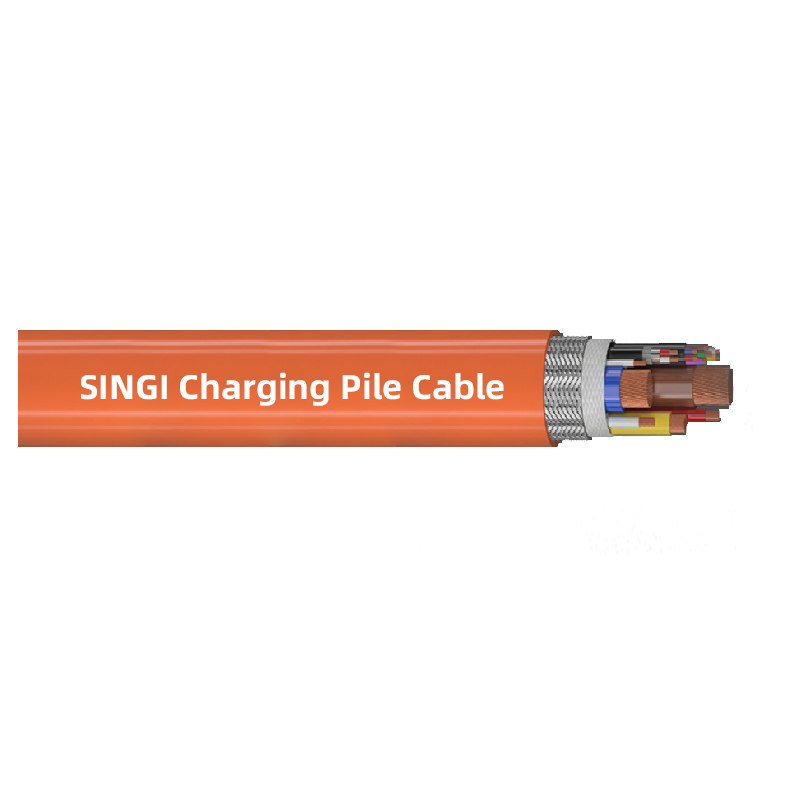
Choosing the right charging pile cable is critical for EV infrastructure reliability and safety. This guide covers key standards, material choices, and performance factors for engineers and procurement professionals assessing the Singi Charging Pile Cable from Singi-Cable.
Article Outline: This article examines the technical requirements for charging pile cables, the role of international standards, material comparison, choice criteria, and the engineering advantages of Singi-Cable's offering.
Charging pile cables must comply with stringent international standards to ensure electrical safety, mechanical robustness, and long-term reliability. The primary European standard is EN 50620:2017, which specifies requirements for cables used in electric vehicle charging. It covers rated voltage up to AC 450/750 V or DC 0.6/1 kV, conductor stranding, insulation, sheath materials, and marking., the EN 50525 series (e.g., EN 50525-2-21 for flexible cables) applies to low-voltage energy cables and is referenced for general construction aspects. For global projects, IEC 62930:2017 (photovoltaic cables) is sometimes compared for DC applications, but charging cables follow EN 50620. Compliance with these standards is mandatory for CE marking and market access in the EU.
Charging pile cables experience frequent bending, pulling, and exposure to environmental stressors (UV, oil, abrasion, temperature extremes). A cable that stiffens in cold weather or cracks under UV degrades user experience and poses safety risks. EN 50620 mandates specific flexibility tests (e.g., required bending radius, cyclic flexing) and weather resistance. Singi Charging Pile Cable uses finely stranded copper conductors (Class 5 or 6) for flexibility, and a special TPE or PUR outer sheath that remains pliable from -40°C to +90°C. The sheath also resists oils, acids, and alkali. Durability is further enhanced by aramid yarn reinforcement inside the jacket, preventing kinking and extending service life in high-traffic stations.
Choice depends on several factors: current rating, cable length, voltage level, environmental conditions, and connector type. For AC charging (up to 32A, 7.2 kW), a 3-core cable (L+N+PE) with cross-section 2.5–6 mm² is typical. For DC charging (up to 350A, 800V), larger cross-sections (50–120 mm²) and dual-core (DC+ and DC- with PE) are required. Singi-Cable offers a range of charging pile cables with options for Type 2, CCS, CHAdeMO, and GB/T connectors. The cable's bending radius should match the installation layout—tight bends require finer stranding. For outdoor installations, UV-resistant black sheath is recommended; for indoor, light color improves aesthetics. Always verify that the cable holds a valid EN 50620 certificate from a notified body.
Singi Charging Pile Cable is engineered for long-term reliability in demanding EV charging environments. Key features include:
These specifications ensure the cable withstands thousands of bending cycles, exposure to automotive fluids, and temperature swings without degradation. Singi-Cable also offers custom lengths, connector pre-assembly, and marking with project-specific codes.
Note: Always verify that the cable's certificate covers the exact model and voltage rating required for your application. Singi-Cable provides test reports upon request.
EN 50620 is the dedicated standard for EV charging cables, while IEC 62930 is for photovoltaic cables. Charging cables require additional flexibility and mechanical endurance tests not covered in PV standards. Singi Charging Pile Cable is designed to EN 50620.
Yes, Singi offers cable variants with larger cross-sections (up to 120 mm²) rated for DC 0.6/1 kV, suitable for CCS and CHAdeMO charging.
Singi cables can be terminated with Type 1, Type 2, CCS1/2, CHAdeMO, and GB/T connectors. Custom termination is available.
Halogen-free (LSZH) variants are available upon request, meeting IEC 60754 and EN 50525-2-21 for low smoke and corrosive gas emission.
Per EN 50620, the cable undergoes a flexing test of at least 10,000 cycles at a specified radius, with electrical continuity monitored. Singi cables pass 20,000 cycles without failure.
For reliable EV charging infrastructure, specify Singi Charging Pile Cable from Singi-Cable. Contact our engineering team for technical datasheets and custom solutions tailored to your project.
References
[1] EN 50620:2017. Electric cables for charging of electric vehicles [S].
[2] EN 50525 Series. Electric cables — Low voltage energy cables of rated voltages up to 450/750 V [S].
[3] IEC 62930:2017. Electric cables for photovoltaic systems [S].
![Singi Cable[Email: singi100@singi.com]](/u_file/2303/photo/11c1fa1eb8.jpg)

