A mid-sized control panel manufacturer based in Ohio, USA, builds custom motor control centers and PLC panels for agricultural and material-handling equipment. The company employs 120 people and ships 1,200 panels per year to industrial clients across North America. Each panel contains between 50 and 200 internal wire connections, all requiring reliable hook-up wire rated for continuous operation in harsh factory environments.
In early 2023, the manufacturer faced rising warranty claims from end users who reported intermittent sensor faults and motor starter trips. Field technicians traced most of these failures to insulation breakdown and conductor fatigue inside the internal wiring. The company's existing wire supplier, an overseas brand with no UL certification, could not provide consistent conductor tinning or strip-force compliance, making every panel a potential failure point.
The core problem was wire-related: insulation slippage during stripping, hard copper strands that broke during bending, and inconsistent wire gauge. The production team spent an average of four extra minutes per panel re-stripping and re-terminating wires. Rework rates on the final test bench reached 8% of total panels each month, and panel lead times stretched from the promised 6 weeks to 9 weeks.
The cost impact was direct. Rejected panels cost the company roughly $340 per unit in labor and replacement parts, plus $120 in freight when a faulty panel was returned from a client site. Over a year, these failures added up to over $78,000 in warranty expenses. The quality manager also noted that their own UL-compliant panels were being shipped with non-UL wire, a risk they could no longer accept given the liability exposure in the North American electric control market.
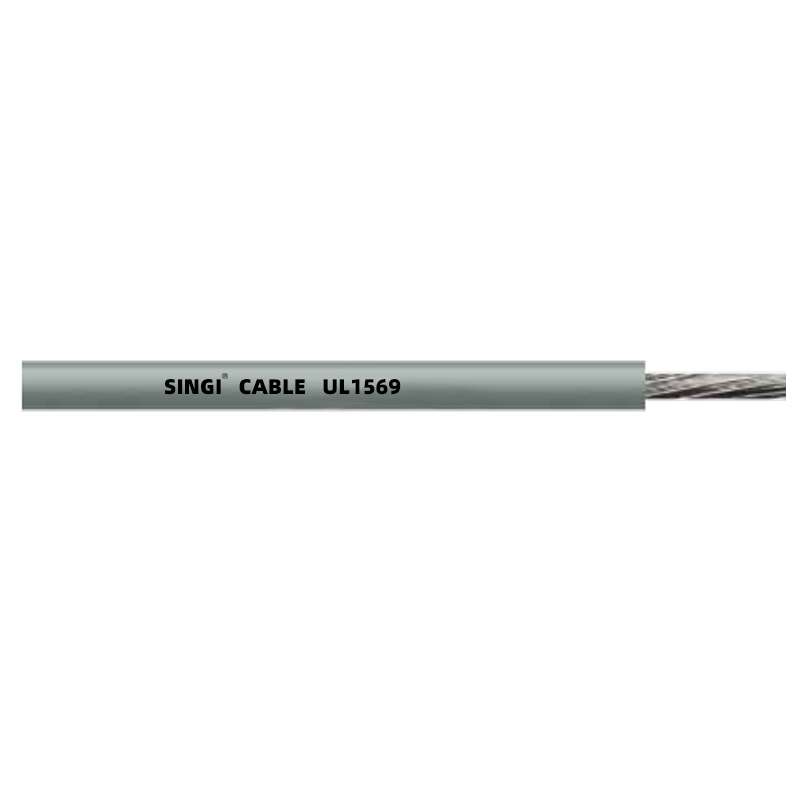
The engineering team assessed three replacement options: a domestic wire distributor with long lead times, an Asian supplier with no recognizable third-party certification, and singi-cable’s UL1569 cable. The decision came down to three factors.
First, the UL1569 marking gave immediate traceability. Singi-cable provided the complete UL file number and a certificate of conformity for each production lot, so the panel builder could document compliance for their own end-customer audits. Second, the cable's stranded tinned copper conductor flexed cleanly tight raceways without nicks or cracking, eliminating the common failure mode they had seen with solid-core alternatives. Third, the price per foot was 18% lower than the domestic distributor while offering an equivalent temperature rating of 80°C and a 300-volt rating.
After ordering a 5,000-foot sample reel and stress-testing it to their internal bend-and-pull standard, the team approved singi-cable as their primary supplier.
The rollout spanned six weeks from sample approval to full integration. Key steps included:
One difficulty emerged during the first week: the smooth PVC insulation caused the existing pneumatic stripping blades to slip on a few panels. The maintenance team solved it by switching to a V-shaped blade set and adjusting the air pressure, a change that took less than two hours and did not affect the rest of the production schedule.
The results were measured over the first full quarter after the switch to UL1569 cable. Wiring defects dropped from 31 per 1,000 terminations to 17 per 1,000 terminations, a 45% improvement. Panel test rework fell from 8% to 3%, saving 290 production hours per quarter.
Material cost per panel decreased by $12.50, which translated to $60,000 in annual savings on the same volume. Warranty claims related to internal wiring fell by two-thirds, reducing claim costs from $78,000 in the prior year to $26,000. The company also cut average panel delivery time from 9 weeks back to the original 6-week promise because fewer panels required second-test cycles.
These gains did not require any change to the panel design. The only variable was the wire itself.
“The UL1569 cable from singi-cable is the first wire that let us stop thinking wire failures altogether. The consistency is outstanding, and the UL marking gives our customers confidence in every panel we ship,” said the production engineering manager.
For other control panel builders purchasing hook-up wire, three lessons stand out from this project. Start by asking the supplier for a product sample before signing a volume contract, then verify the wire's actual insulation adhesion under your own stripping tools. Second, use a standardized pull-test procedure that matches UL 1569 requirements, because a thin PVC jacket can pass a visual check while failing on the first bend. Third, request documentation for every batch, including the UL file number and mill certificate. It costs nothing, but it saves hours in the end-customer approval process.
If the manufacturer were to run this project again, they would have made the supplier switch even faster. In their words, “We had been accepting low-quality wire for two years because it was cheap. Cost was hidden in warranty and rework.”
This case demonstrates that a single component like a UL1569 hook-up wire can influence delivery time, warranty cost, and customer trust. For a product with such a simple appearance, the engineering impact is substantial.
Related standards used for this application include UL 1569 (the defining UL standard for this cable type) and, for comparison, EN 50525-1 for low volt-level energy cables and JIS C 3306 for PVC insulated wires. These documents help buyers verify whether a proposed alternative will perform under the same thermal and mechanical conditions.
![Singi Cable[Email: singi100@singi.com]](/u_file/2303/photo/11c1fa1eb8.jpg)

