A mid-sized automotive parts manufacturer in Ohio, USA, produces precision-machined aluminum brackets for Tier 1 suppliers. The plant employs 350 people across two production lines. Each line feeds eight CNC machines, four welding cells, and automated vision inspection stations. The company began an Industry 4.0 upgrade in 2023, adding over 60 sensors and smart cameras to the shop floor. This wave of connected equipment relies on a stable Ethernet infrastructure that can handle high-frame-rate data streams without interruption.
The facility had been running the same unshielded Category 5 cabling installed back in 2010. As the new sensors came online, the IT department noticed the network struggling to keep up. Machine controllers dropped their links intermittently, and production floor managers started recording unexplained stoppages.
The existing Cat 5 links were rated for 100 Mbps and were never designed for the continuous, time-sensitive data traffic now required. With every machine generating log data and running remote diagnostics, the plant's network suffered packet loss of up to 6.2% during peak shifts. The average link-down event occurred 3–4 times per month, halting several CNC machines simultaneously until the controller re-established its connection. Each stoppage lasted 20 to 45 minutes, and the finance department estimated that a single hour of unplanned downtime cost the plant $36,000 in missed shipments and overtime labor.
A previous attempt to fix the issue used inexpensive Cat 5e patch cables purchased from an online retailer. The cables failed within months. A sample sent to a local electrical lab revealed that the conductors were copper-clad aluminum (CCA) than solid copper. CCA has higher electrical resistance and poor resistance to bending, which caused the exact intermittent faults the plant was trying to eliminate. This experience made the maintenance team cautious trusting any cabling supplier without proper documentation.
The plant assessed three structured cabling vendors. A well-known national brand quoted a complete Cat 6a solution at $14,500 with an 8-week lead time. A regional supplier offered a lower-priced unshielded Cat 6 network, but could not provide shielded options for the welding area. Singi-cable stood out because it offered the entire scope of copper cabling in one request: Cat 5e, Cat 6, Cat 6a, Cat 7, and Cat 8 Ethernet cables, all specified to meet ANSI/TIA-568.0-E requirements.
The purchasing team also valued singi-cable's factory test reports. Every spool included a third-party certification showing conductor gauge, shielding performance, and crosstalk margin. That documentation allowed the plant's maintenance engineers to verify the cable quality before installation, eliminating the risk of another CCA incident. The total material and shipping quote came in 18% lower than the national brand, and singi-cable had the required Cat 6a and Cat 7 cables available on short lead time.
The installation project ran across seven weeks. The plant phased the deployment to minimize production impact. The first step replaced the horizontal cables between 13 PLC cabinets and the main network switch with solid copper Cat 6 Ethernet cables. Next, the warehouse area received Cat 6a runs for future camera expansion. The server rack at the control office was rewired with short Cat 7 shielded patch cables.
The most difficult section was a 60-foot segment passing through the welding cell area. Welding robots generate intense electromagnetic interference, and the original plan used unshielded Cat 6a cables. After the first week, error counters on that link showed a high rate of retransmissions. The team switched that specific segment to singi-cable's Cat 7 S/FTP cable, which features an overall metal braid and paired foil shielding. The installers terminated the shield drains to a dedicated earth bar in the welding switchboard. This change reduced error counts to near zero in the post-installation test report.
The final step was a full channel certification test for all 48 data links. The network contractor used a certifying tester to validate performance against the TIA-568.2-D requirements. A complete as-built report was handed to the IT team, showing each cable's length, attenuation, return loss, and wire map.
Two months after the S/FTP welding segment was completed, the plant's IT department published a network reliability comparison. The results were measured against the three-month average before the upgrade:
The network has been stable enough that the plant permitted its autonomous guided vehicle (AGV) trial to proceed. The AGV rollout, delayed due to connection timeouts, finished in 10 weeks instead of the planned 16 weeks.
“Prior to the upgrade, I expected we would still see random glitches because of the welding environment. The singi-cable Cat 6 and Cat 7 combination eliminated those failures. The certified test report is gold – we now have as-built documentation we can hand to the next engineer.” – Plant IT Manager
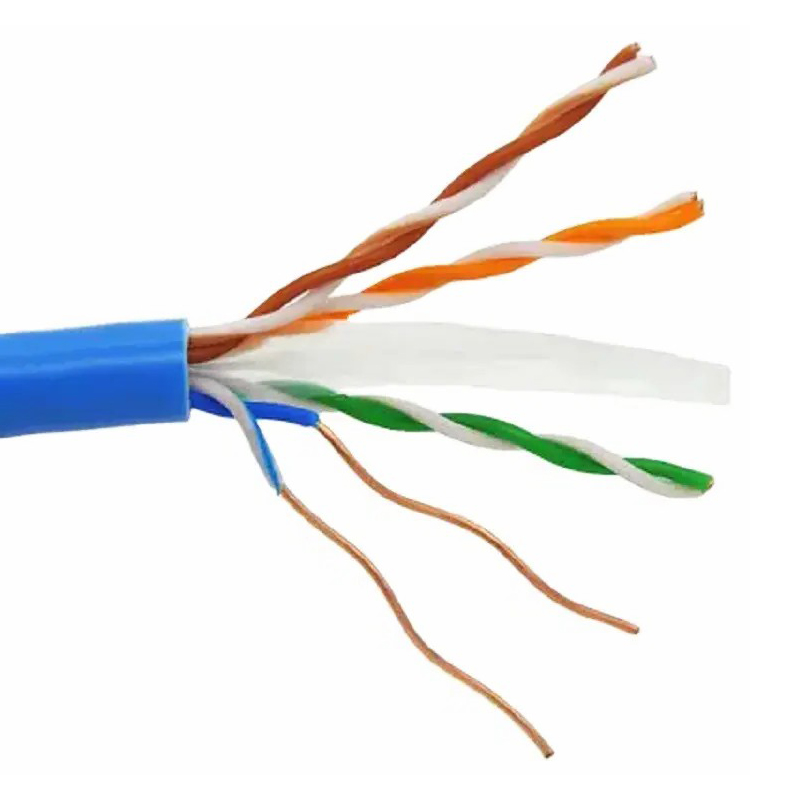
Companies that operate industrial networks should not buy Ethernet cables based on price alone. The CCA cable attempt in this project caused three months of unnecessary downtime. One practical measure is to strip a sample of the outer jacket and check the conductor color; copper is reddish-brown, while CCA shows a silvery aluminum core.
Second, standardizing on one supplier that provides the full Cat 5e, Cat 6, Cat 6a, Cat 7, and Cat 8 range simplified the design and support process. Mixing multiple vendors leads to compatibility gaps in shielding and connector design.
Third, require a certified link test report after installation. The manufacturer's spool certification confirms cable quality before pulling, and the installation certification confirms that every connector pair works. If this project were repeated, the team would have specified the shielded Cat 7 path from the outset in the welding area, avoiding the first-week correction.
![Singi Cable[Email: singi100@singi.com]](/u_file/2303/photo/11c1fa1eb8.jpg)

