A regional telecommunications operator in the midwestern United States was tasked with bringing high-speed internet to 40,000 households across a 1,200-square-mile rural service area. The company had an existing copper network, but it was aging and incapable of delivering the bandwidth demanded by modern applications. With a small engineering team and a tight capital budget, the operator needed to build a fiber backbone that would last 20 years or more without requiring constant maintenance.
The operator’s leadership knew that aerial installation would be cheaper in the short run, but the region experiences frequent ice storms, falling branches, and occasional high winds. Any aerial fiber would need to be rugged enough to handle these conditions. The network also had to run along railroad corridors and through flood-prone creek crossings, where rodents, moisture, and physical stress were constant threats.
The initial design used a standard loose-tube cable with a polyethylene jacket, intended for duct installation. But the terrain made duct installation impractical in many sections. Boring through rocky soil was expensive, and in some places the only option was direct burial. The operator realized that the cable they had specified was not rated for burial without conduit, and adding conduit would double the material cost and extend the project timeline by several months.
There were also recurring problems with rodent damage on existing aerial spans. Squirrels and other small animals had chewed through non-armored cables in neighboring municipalities, causing outages that lasted hours while crews located and spliced the broken fibers. In one storm season, the operator experienced 14 separate cable faults in a single month across its existing network, each requiring an average of 3.5 hours of truck time and repair work.
The project budget allowed for $4.2 million in capital expenditure. Earlier proposals using traditional buried conduit systems came in at $5.8 million, exceeding the budget by 38%. The team was under pressure from local government to deliver service by a fixed deadline, so they could not afford a redesign that would delay construction.
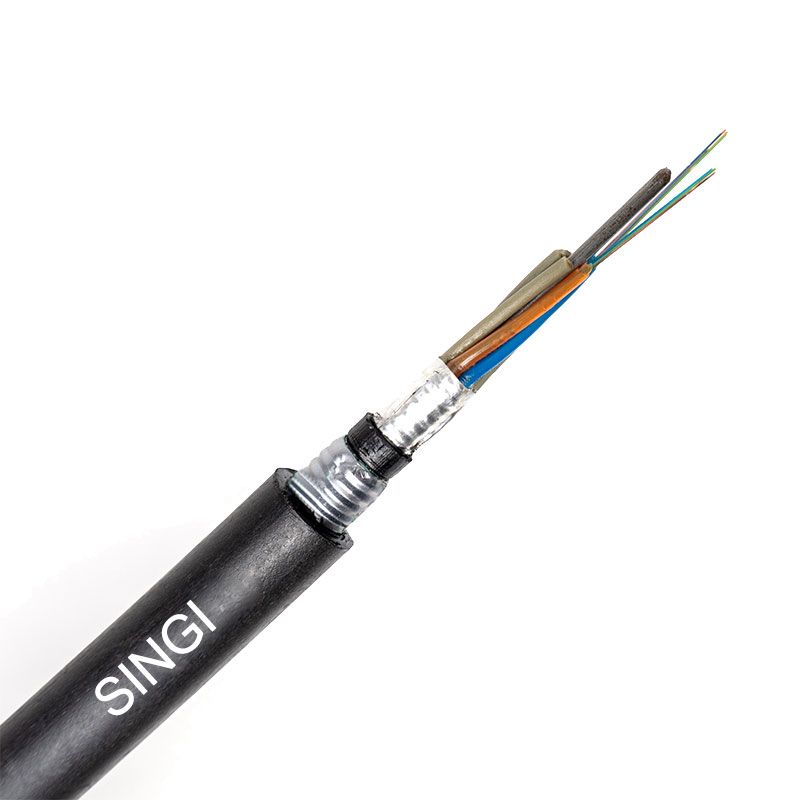
The operator assessed three options: a standard polyethylene loose-tube cable, a steel-tape-armored cable similar to GYTY53, and a heavier double-armored cable. The standard cable was cheap but could not be buried in rocky soil. The double-armored cable offered more protection than needed and cost 18% more per meter. GYTY53 met the middle ground: it had a steel tape armor layer that prevented rodent damage and provided crush resistance, while remaining flexible enough for aerial lashing and direct burial.
Another deciding factor was the cable’s water-blocking technology. GYTY53 uses a water-soluble tape and water-blocking yarn instead of traditional gel-filled tubes. This simplified splicing and termination because there was no gel to clean off, which reduced the average splice time by 20% compared to gel-filled cables the crew had used on earlier projects.
The cable also met the IEC 60794 series standards for outdoor optical fiber cables, which gave the engineering team confidence that mechanical and environmental performance would be consistent across all sections of the network. The operator’s procurement manager noted that singi-cable provided complete test reports for every production batch, allowing the contractor to verify tensile strength and crush resistance before installation began.
The project was divided into three phases, each covering roughly 140 miles of fiber. The first phase started in late spring and took nine weeks to complete. The crew used a combination of trenching in rural easements and aerial lashing along utility poles in more developed areas.
The key implementation steps were:
One challenge occurred during the second phase when the cable had to cross a 300-foot railroad right-of-way. The railroad required a directional bore beneath the tracks. The initial bore was misaligned by two feet, and the crew had to pull the cable back and re-bore. Because the GYTY53 cable had a steel tape armor, it survived the repeated pulling and rerouting without any fiber breakage. A non-armored cable would have been damaged during the extraction and reinstallation.
The network was completed on schedule and 12% under budget. The final cost was $3.7 million, a 25% reduction compared to the original conduit-based design.
The new fiber backbone now supports 10 Gbps symmetric services to business customers and 1 Gbps to residential subscribers. The operator’s customer satisfaction scores rose by 18 points in the first year, and the churn rate among new subscribers is 40% lower than the existing DSL customer base.
“We were skeptical direct burying a cable in this terrain, but the GYTY53 has been through two freeze-thaw cycles without a single issue. The steel armor is exactly what we needed to keep rodents out, and the splicing speed surprised our crew. It exceeded our expectations on both cost and reliability.”
— Network Construction Manager, Regional Telecom Operator
For other operators planning rural fiber deployments, three lessons stand out from this project.
If the project were done again, the operator would perform an additional pilot burial in the most rocky section during winter. That would have provided more confidence long-term crush resistance before committing to the full rollout. Otherwise, the GYTY53 fiber optic cable is now the default choice for any future network expansion in the region.
![Singi Cable[Email: singi100@singi.com]](/u_file/2303/photo/11c1fa1eb8.jpg)

