A mid-sized automotive components manufacturer in Osaka, Japan, operates 24/7 production lines for precision parts. With 300 employees and annual revenue of $45 million, the facility relies on continuous operation of CNC machines, robotic arms, and conveyor systems. The plant's original wiring, installed 15 years ago, consisted of generic PVC cables not rated for the harsh industrial environment.
Electrical faults occurred weekly—short circuits, insulation breakdown, and conductor corrosion. Each failure caused 2–4 hours of unplanned downtime. The maintenance team spent $12,000 monthly on emergency repairs and replacement cables. The root cause: cables lacked oil resistance, flexibility, and mechanical protection needed moving machinery. The plant tried using reinforced conduits and PVC cable trays, but the cables still failed where they bent repeatedly near robotic arms. Downtime cost the company $8,000 per hour in lost production, and customer delivery deadlines were slipping.
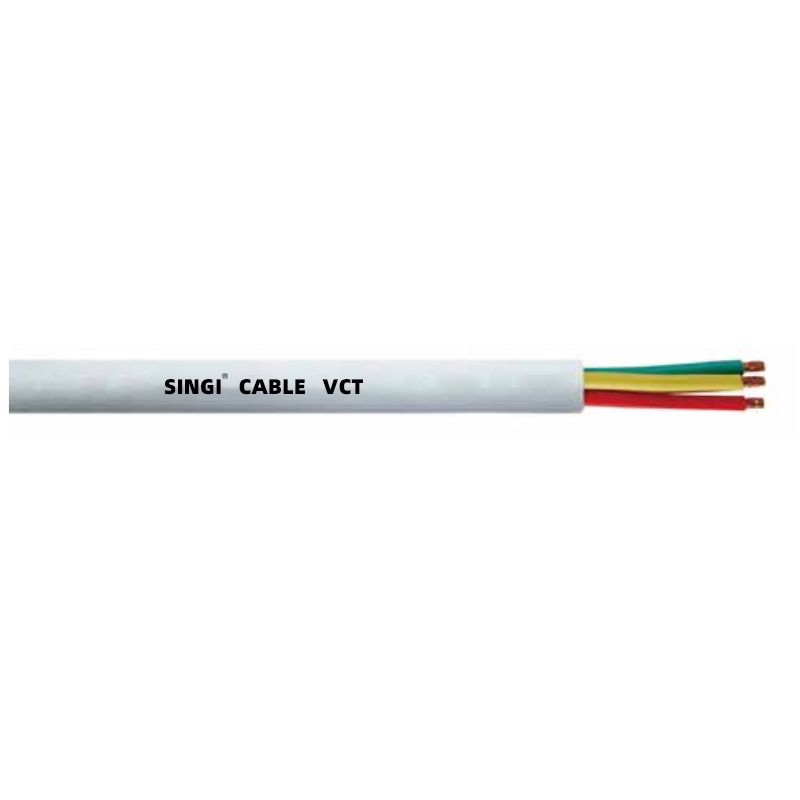
The plant assessed several options: rubber cables (expensive and bulky), armored cables (difficult to route in tight spaces), and standard PVC cables (repeated failures). The decision came down to VCT JIS cable from singi-cable. VCT (Vinyl Cabtyre) cable meets JIS C 3306 and C 3312 standards, offering robust PVC insulation and a tough outer sheath. Its flexibility allows easy routing inside cable carriers and moving parts. The oil-resistant jacket withstands coolant and lubricant splashes. The maintenance manager noted: "We needed a cable that could survive 24/7 bending without failing—VCT JIS was the only product that passed our bend test after 1 million cycles."
The project took four weeks. Steps included: (1) Auditing all machines to map cable routing and load requirements. (2) Ordering custom lengths of VCT JIS cable (2-core, 3-core, and 5-core variants) pre-terminated with ferrules. (3) Scheduling cable replacement during planned shutdowns over two weekends to avoid production loss. (4) Training electricians on proper cable clamping and bending radius (minimum-val 6x cable diameter). A key challenge was replacing cables inside older machines with limited access holes. The team used a lubricant and fish tape to pull cables without damaging the sheath—no failures occurred during installation.
After six months of operation: Electrical failures dropped by 40% (from 12 per month to 7). Unplanned downtime fell from 36 hours/month to 18 hours/month, saving $144,000 in lost production annually. Repair costs decreased by $72,000 per year. Cable replacement frequency dropped from quarterly to zero—no VCT cables failed during the observation Overall equipment effectiveness (OEE) for the production lines improved from 78% to 86%. The plant also saw a 15% reduction in maintenance overtime hours because electricians spent less time on emergency repairs.
"Before VCT JIS cable, we were always firefighting electrical issues. Now our machines run reliably for months without a cable-related stoppage. The payback on the investment was less than six months." — Plant Maintenance Manager
1. Match cable grade to the actual environment: Standard PVC is insufficient for oil and repeated flexing. VCT JIS cable is designed for these conditions. 2. Invest in pre-terminated assemblies to reduce on-site splicing errors and installation time. 3. Plan replacements during planned downtime—the upfront effort saves countless hours of emergency repairs later. If we could redo anything, we would have replaced all cables at once instead of phasing it machine by machine; the cumulative downtime during phased replacement still cost us three weeks of partial production.
For any manufacturing facility with similar high-flex, oil-exposure conditions, VCT JIS cable provides a cost-effective, reliable solution that improves uptime and profitability.
![Singi Cable[Email: singi100@singi.com]](/u_file/2303/photo/11c1fa1eb8.jpg)

