KIV HKIV JIS Cable from singi-cable are PVC insulated wires conforming to Japanese Industrial Standards (JIS C 3306 and JIS C 3312). Designed for control panels, switchboards, and general low-volt-level wiring, these cables provide reliable insulation, flame retardance, and long service life. This guide explains their technical features, application differences, and choice factors for engineers and procurement professionals.
- What are KIV/HKIV cables: definitions, construction, and JIS compliance
- Importance of JIS standards: safety, compatibility, and PSE certification
- Side-by-side parameter comparison: KIV single-core vs HKIV multi-core
- Typical use cases: control wiring, power distribution, and machine tools
- Choice criteria: volt-level, temperature, core count, and conductor size
What Are KIV and HKIV Cables?
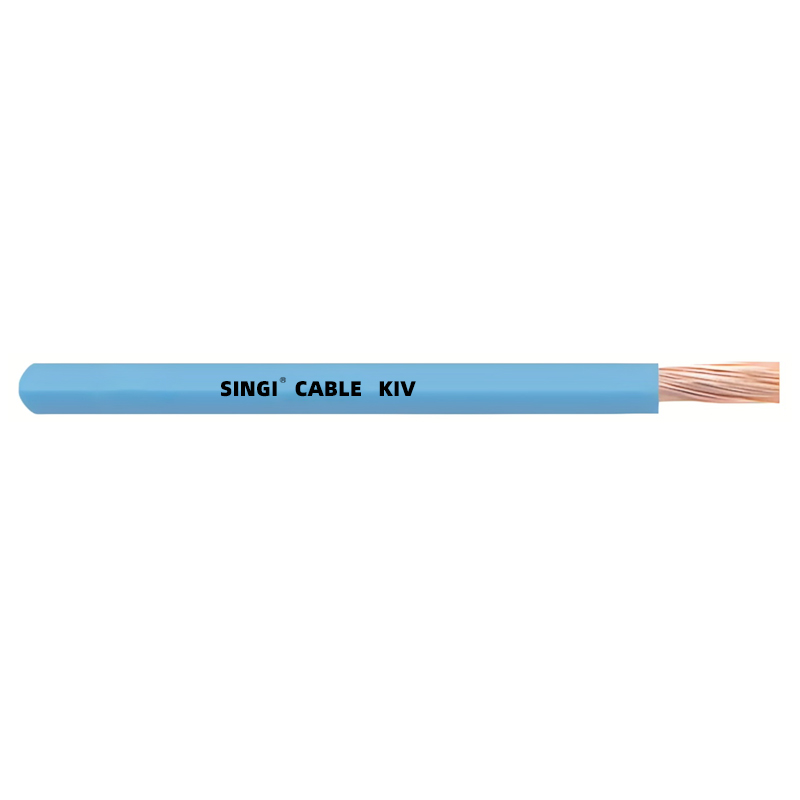
KIV is a single-core PVC insulated wire rated at 600 V, used for internal wiring of electrical equipment and control panels. HKIV is the multi-core or sheathed version of KIV, with a PVC outer jacket for additional mechanical protection. Both types comply with JIS C 3306 and JIS C 3312, which define conductor sizes, insulation thickness, volt-level ratings, and flame retardancy requirements. Singi-cable manufactures these cables in a wide range of conductor cross-sections (0.75 mm² to 100 mm²) and color options, ensuring compatibility with Japanese-designed machinery and building installations.
Note: KIV and HKIV cables are part of the JIS family of PVC insulated wires that also includes VCT, VCTF, and VVF cables. However, KIV/HKIV are intended for stationary wiring inside enclosures and conduits, not for outdoor or direct burial use.
Why Do JIS Standards Matter for Electrical Cable Choice?
JIS C 3306 and JIS C 3312 are recognized by the Japanese Electrical Appliance and Material Safety Law (PSE). Using JIS-compliant cables is mandatory for equipment sold in Japan and required by global OEMs exporting to Japanese markets. These standards specify:
- Conductor material: annealed copper (tinned or bare)
- Insulation material: PVC with defined thickness based on volt-level grade
- Test requirements: volt-level withstand (2 kV), insulation resistance (>100 MΩ·km), and flame test
- Marking: cable printed with JIS mark, conductor size, and manufacturer code
singi-cable ensures every KIV and HKIV reel meets these parameters, giving engineers confidence in installation safety and long-term performance.
How Do KIV and HKIV Cables Compare to Other PVC Insulated Wires?
The table below highlights the differences between KIV (single-core) and HKIV (multi-core with sheath) cables from singi-cable.
| Parameter | KIV (Single-Core) | HKIV (Multi-Core with Sheath) |
| Conductor Count | 1 | 2 to 30+ cores |
| Volt-level Rating | 600 V | 600 V |
| Temperature Range | -30°C to +60°C (static) | -30°C to +60°C (static) |
| Insulation Material | PVC (JIS C 3306) | PVC (JIS C 3306 per core, sheath per JIS C 3312) |
| Flame Retardancy | Vertical flame test pass | Vertical flame test pass |
| Common Applications | Control panel wiring, terminal connections | Multi-channel signal/power transmission, drag chains (flex version) |
Which Applications Are Best Suited for KIV and HKIV Cables?
KIV and HKIV cables from singi-cable are used in:
- Control cabinets and switchboards: For connecting relays, PLCs, and breakers inside enclosures.
- Machine tools and industrial equipment: Internal wiring requiring compact, flexible conductors.
- Building distribution boards: Secondary wiring from main feeders to branch circuits in dry locations.
- Automation and instrumentation: HKIV multi-core versions transmit sensor signals and control commands.
These cables are not intended for outdoor exposure, direct burial, or high-motion applications unless rated (e.g., HKIV flexible). For such cases, singi-cable recommends VCT or rubber-sheathed alternatives.
How to Choose the Correct KIV or HKIV Cable for Your Installation?
When choosing KIV/HKIV cables, consider the following:
- Number of cores: Choose KIV for single-circuit runs; choose HKIV for multiple circuits in one jacket.
- Conductor size: Refer to current-carrying capacity tables in JIS C 3306. For example, 2.0 mm² is typical for 20 A circuits.
- Insulation color: Standard colors include black, white, red, blue, green/yellow for grounding.
- Flexibility requirement: If the cable moves slightly during operation, specify HKIV flexible made with finer strands.
- Certification: Ensure the cable carries PSE or JIS marking. Singi-cable provides full compliance documentation.
Tip: For high-density control panels, using HKIV reduces installation time compared to pulling multiple single-core KIV wires. However, KIV offers easier identification and replacement for individual circuits.
Asked Questions KIV and HKIV Cables
Is KIV cable the same as THHN wire?
KIV (JIS) and THHN (UL) are both PVC insulated wires but use different standards. KIV has a thinner insulation and lower temperature rating (60°C vs 90°C for THHN). They are not interchangeable without verification for the specific application.
What is the difference between KIV and VCT cable?
KIV is single-core or multi-core with a thin sheath (HKIV), while VCT has a thick rubber or PVC outer jacket designed for portable equipment and moderate mechanical abuse. VCT is more flexible and oil-resistant than standard HKIV.
Can KIV cable be used for outdoor installations?
No, KIV and HKIV are intended for indoor dry locations only. Outdoor use requires UV-resistant, water-resistant cables such as hermetically sealed or weatherproof types.
For reliable JIS-compliant wiring, choose KIV HKIV JIS Cable from singi-cable. We offer cut-to-length, custom colors, and delivery for OEM and distributor orders. Contact your sales representative for a quotation or technical datasheet.
References
- JIS C 3306:2000, PVC insulated wires (IV wires) – Japanese Industrial Standard.
- JIS C 3312:2000, PVC insulated cables (VV cables) – Japanese Industrial Standard.
- Electrical Appliance and Material Safety Law (PSE) – Japan, Cabinet Order No. 370, 1962.
![Singi Cable[Email: singi100@singi.com]](/u_file/2303/photo/11c1fa1eb8.jpg)

