A regional security systems integrator with 45 employees manages video surveillance networks for industrial facilities across three states. The company installs and maintains more than 200 analog and hybrid IP-CCTV systems, covering factories, distribution centers, and utility sites. Their clients rely on continuous video recording for safety compliance and theft prevention.
Over time, the integrator faced a growing number of transmission-related failures. Camera feeds showed pixelation, freeze frames, and complete dropouts, in areas close to high-volt-level motors and variable frequency drives. On a typical month, the team recorded 48 signal incidents across all sites. Each incident required a truck roll and an average of 1.8 hours of troubleshooting, including re-termination or replacement of the cable.
, the integrator had tried using a lower-cost RG59 cable from another supplier. The substandard shielding allowed electromagnetic interference to degrade the video signal. Even after upgrading cameras and digital video recorders, the transmission problems remained. The integrator also tested a fiber-optic solution for two retrofit projects, but the cost of pulling fiber through existing conduit was too high for the clients' budgets.
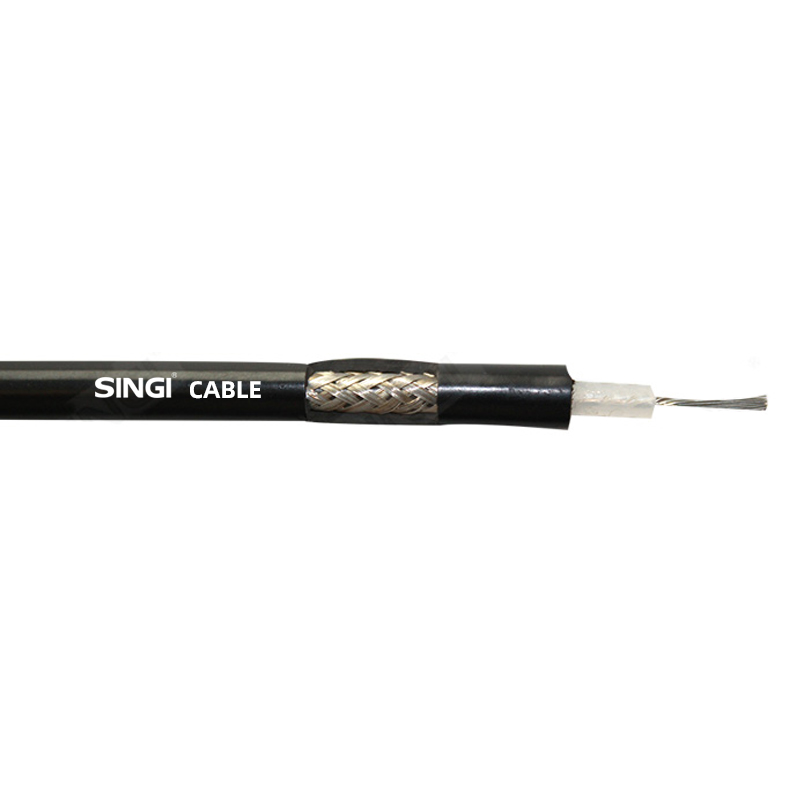
The decision team assessed three options: another budget cable, a plenum-rated cable, and the RG Series Coaxial Cable from singi-cable. The budget cable had inconsistent impedance and poor shielding. The plenum-rated cable met fire codes but did not address signal quality. The RG series offered a balanced combination of electrical performance and cost-effectiveness.
Key reasons for choosing the RG series were its 95% copper braid shielding, which reduces electromagnetic interference, and its stable 75-ohm impedance, which matches CCTV equipment. The cable also had a lower insertion loss per 100 meters compared to standard RG59, enabling longer runs without signal repeaters. The integrator received a sample batch and tested it on two problematic runs; the results showed a clean waveform and no visible interference.
The rollout began with a pilot on one distribution center that accounted for 12% of all signal incidents. Over an eight-week period, the integrator replaced 3,200 meters of cable, installed new connectors, and tested every run with a time-domain reflectometer. The project followed a structured process:
A typical difficulty was routing the cable through existing metallic conduits without nicking the jacket. The team used pulling lubricant and installed the cable to avoid kinking. After the pilot site showed a 50% drop in incidents, the integrator replicated the process across all remaining sites over the next five months.
After the full deployment, the integrator measured the following outcomes over a 90-day period:
Across the integrator's service territory, the overall mean time between failures for video transmission increased by threefold. This improvement allowed the company to shift technicians from reactive repairs to proactive system audits, which opened a new revenue stream for the business.
"The signal quality is now stable, even in the noisiest part of the factory floor. Our techs spend less time chasing intermittent faults, and the client's security team trusts the system for post-incident review." — Operations Director, Security Systems Integrator
This application case offers three takeaways for other integrators and facility teams:
If the integrator were to reprioritize, they would test the cable's shielded variants in the harshest locations first, than using one type everywhere. They also noted that training the second-tier technicians earlier would have reduced the learning curve during the rollout.
Product complies with IEC 61196 series for coaxial communication cables. For more details on the standard, see IEC 61196 Part 1: Total specification for coaxial communication cables. IEC 61196-1.
![Singi Cable[Email: singi100@singi.com]](/u_file/2303/photo/11c1fa1eb8.jpg)

