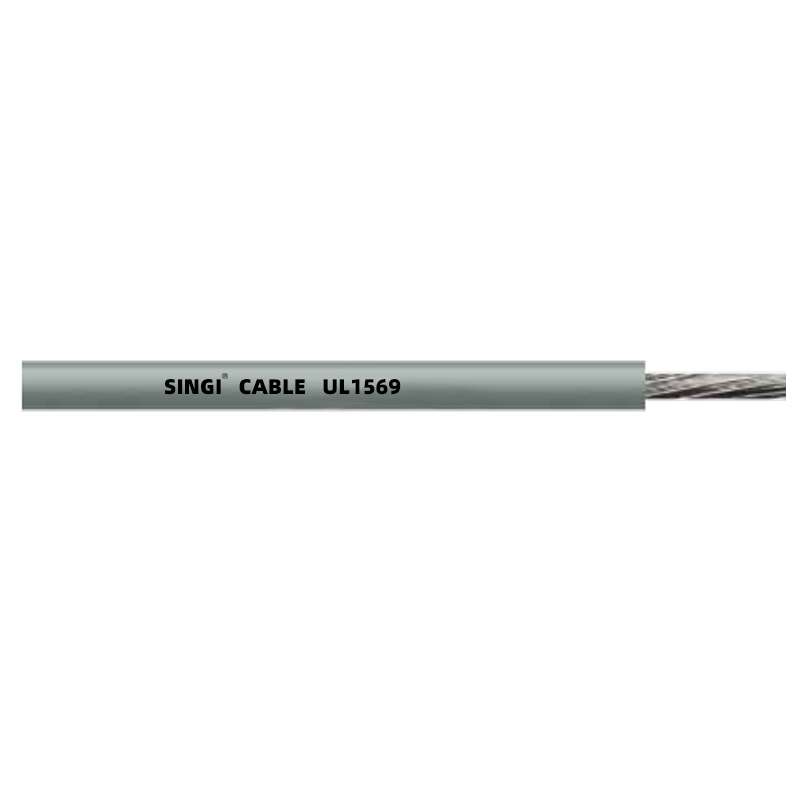
UL1569 cable is a UL-recognized single-conductor electronic wire widely used for internal wiring of appliances, control panels, and electronic equipment. This article explains its key features, performance standards, and choice criteria for engineers and purchasers. For the
UL1569 cable range from
singi-cable, specifications include 300V rated volt-level, temperature grades of 80°C or 105°C, and PVC insulation.
Table of Contents
- What Is UL1569 Cable and What Does It Do?
- Why Is UL1569 Cable a Preferred Option for Internal Wiring?
- How Does UL1569 Cable Compare to Other UL Styles?
- What Technical Specifications Matter Most When Choosing UL1569 Cable?
- Which Application Scenarios Require UL1569 Cable?
- How to Verify UL1569 Cable Quality During Procurement?
Key Points in This Article
- Definition and purpose of UL1569 cable
- Advantages over non-UL or alternative wire styles
- Critical technical parameters (volt-level, temperature, gauge)
- Common applications in industrial and commercial equipment
- Quality verification methods (certification, testing, markings)
What Is UL1569 Cable and What Does It Do?
UL1569 cable is a single-conductor, PVC-insulated electronic wire recognized under Underwriters Laboratories (UL) Standard 758. It is rated for 300V and available in temperature ratings of 80°C or 105°C, with conductor sizes ranging from 30 AWG to 4/0 AWG. The cable is designed for internal wiring of electrical and electronic equipment where flexibility, flame resistance, and reliable insulation are required. It is not intended for external building wiring or direct burial.
Why Is UL1569 Cable a Preferred Option for Internal Wiring?
UL1569 cable offers several benefits for equipment manufacturers: it meets UL 758 safety requirements, passes VW-1 vertical flame test (UL 1581), and has thin-wall PVC insulation that saves space in crowded panels. Compared to non-UL wires, UL1569 simplifies regulatory approval for end products because it is a recognized component. The 300V rating is sufficient for most control circuits, and the 105°C option allows use near heat sources., the cable is available in stranded or solid conductors, with tinned or bare copper.
Note: UL1569 cable is confused with UL1007 or UL1015. UL1569 has a thinner insulation wall (0.38 mm typical) than UL1015 (0.76 mm), making it more flexible but with lower volt-level endurance. Always check the specific application volt-level and mechanical requirements.
How Does UL1569 Cable Compare to Other UL Styles?
| UL Style | Volt-level Rating | Temperature | Insulation Thickness | Typical Application |
|---|
| UL1569 | 300V | 80°C or 105°C | 0.38 mm (thin) | Internal wiring of electronics |
| UL1007 | 300V | 80°C | 0.38 mm | Similar to UL1569, but rated 80°C only |
| UL1015 | 600V | 105°C | 0.76 mm (thick) | Higher volt-level internal wiring, appliances |
| UL1430 | 300V | 105°C | 0.38 mm | Fine-strand, flexible wiring for tight spaces |
As shown, UL1569 occupies a middle ground: 300V rating with a 105°C option, thin insulation for space efficiency. It is chosen when both temperature resistance and compactness are needed.
What Technical Specifications Matter Most When Choosing UL1569 Cable?
Key parameters for procurement engineers and buyers include:
- Conductor size (AWG): Match current-carrying capacity (ampacity) to the load. UL1569 ampacity tables are based on 30°C ambient.
- Temperature rating: 80°C vs. 105°C – choose based on maximum-val internal ambient temperature plus self-heating.
- Volt-level rating: 300V AC/DC is standard. For higher volt-levels, consider UL1015 or UL1028.
- Flame rating: VW-1 vertical flame test per UL 1581 is mandatory. Some applications require FT1 or FT2.
- Conductor stranding: Stranded (class B or C) for flexibility; solid for easier termination in fixed installations.
- Finish: Bare copper vs. Tin-plated – tin offers better corrosion resistance in humid environments.
Always check the UL file number of the manufacturer to confirm listing. Singi-cable provides full UL certification documents.
Which Application Scenarios Require UL1569 Cable?
UL1569 is used in a wide range of equipment: control panels, power supplies, HVAC controllers, vending machines, household appliances, lighting fixtures, and industrial electronics. It is suitable for internal wiring where the wire is protected inside an enclosure and not subject to abrasion or flexing. Typical examples include: interconnection of printed circuit boards to switches, relays, and terminal blocks; wiring inside motor starters and PLC cabinets; and internal harnesses for medical devices (non-patient contact).
How to Verify UL1569 Cable Quality During Procurement?
To ensure reliable supply, purchasers should verify the following:
- UL Certification: Request a copy of the UL file card from the supplier. The UL mark should appear on the spool or at regular intervals on the cable jacket.
- Conductor diameter: Measure with a micrometer; allowable tolerance is ±0.002 inches for most sizes.
- Insulation thickness: Required average 0.38 mm per UL 758. Too thin may cause dielectric failure.
- Flame test evidence: Ask for VW-1 test report (UL 1581). Some suppliers provide in-house test data.
- Marking continuity: Cable should be legibly printed with UL1569, AWG size, temperature rating, and manufacturer ID.
- Packaging condition: Spools should be clean, dry, and labeled correctly to avoid mix-ups.
Asked Questions
Is UL1569 cable suitable for outdoor use?
No. UL1569 is designed for internal wiring inside enclosures. It lacks sunlight and moisture resistance. For outdoor applications, consider UL-style cables with weather-resistant jackets like UL3173 or UL1015 with PVC/nylon.
Can UL1569 cable be used for power cords?
UL1569 is not intended for external power cords. It is a single-conductor wire without a jacket. For detachable power supply cords, use UL62 or UL817 listed cable.
What is the difference between UL1569 and UL1007?
Both are 300V thin-wall PVC wires. UL1569 has a 105°C rating option, while UL1007 is 80°C. The construction and insulation materials can also differ; always compare the actual specs.
How do I strip UL1569 cable without nicking the conductor?
Use a precision wire stripper set for PVC insulation. Adjust the blade depth to slightly less than the insulation thickness (0.38 mm) to avoid cutting copper strands. Practice on a scrap piece first.
Does UL1569 cable require a specified bend radius?
Yes, although not explicitly stated in UL 758, a general rule for PVC wires is 10 times the cable OD for static installations and 15 times for dynamic. Exceeding bend radius can stress the insulation and conductor.
Need UL1569 Cable for Your Next Project?
singi-cable offers a full range of UL1569 cables in various AWG sizes, colors, and temperature grades. All products are UL recognized and available with quick lead times. Contact our engineering team for cutting-to-length, stripping, or custom packaging.
References
[1] UL 758. Standard for Appliance Wiring Material (AWM). Underwriters Laboratories, 2020.
[2] UL 1581. Reference Standard for Electrical Wires, Cables, and Flexible Cords. Underwriters Laboratories, 2021.
[3] CSA C22.2 No. 210-17. Appliance Wiring Material. Canadian Standards Association, 2017.
![Singi Cable[Email: singi100@singi.com]](/u_file/2303/photo/11c1fa1eb8.jpg)

