This guide covers KIV and HKIV JIS cables from singi-cable, explaining their compliance with Japanese industrial standards (JIS C 3306), key differences, choice criteria, and common applications in control panels and equipment wiring. Understand why these cables are a reliable choice for engineers and procurement professionals in Asia and beyond.
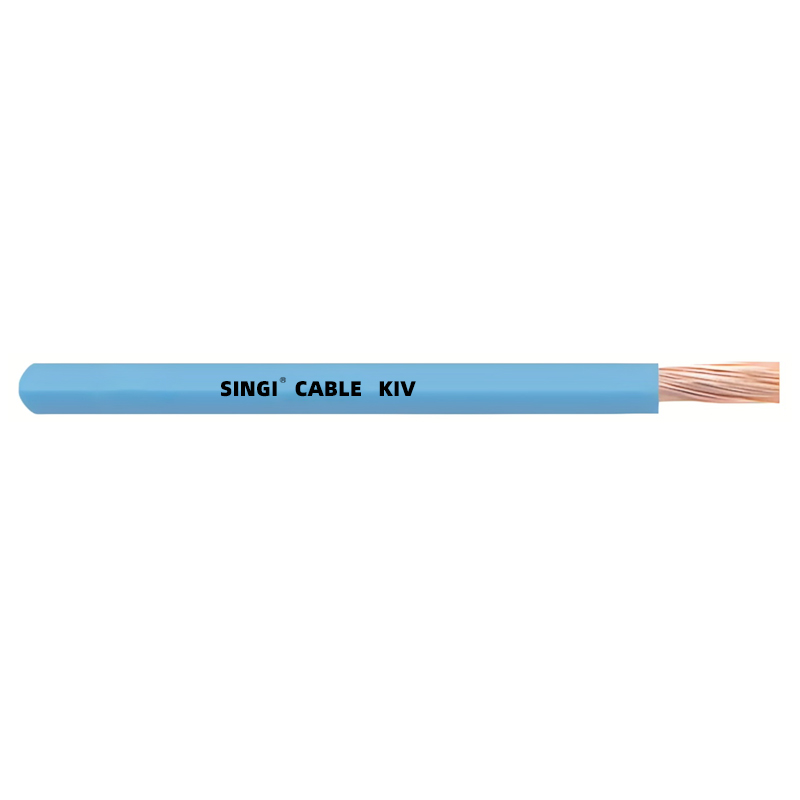
KIV (Kōtatsu Insulated Vinyl) and HKIV (Heikō KIV) cables are PVC insulated wires designed for internal wiring of electrical equipment, control panels, and distribution boards. They follow the Japanese Industrial Standard JIS C 3306, which specifies dimensions, electrical performance, and test methods for 600V grade PVC insulated wires. KIV is a single-core wire, while HKIV is a parallel twin-core cable. Both are widely used in machinery, switchboards, and building installations where reliable insulation and mechanical protection are required.
Note: KIV and HKIV cables are certified under the Japanese PSE (Product Safety of Electrical Appliances and Materials) system, making them mandatory for equipment exported to Japan.
JIS C 3306:2000 defines strict requirements for conductor resistance, insulation thickness, volt-level withstand, and flame retardancy. Adherence to this standard ensures that KIV HKIV cables deliver consistent electrical performance and long service life. The standard also harmonizes with international norms, facilitating acceptance in global supply chains. For engineers and procurement teams, specifying JIS-compliant cables reduces risks of premature failure, short circuits, or non‑conformance during equipment certification.
KIV cables are used for single-conductor internal wiring in appliances, lighting fixtures, and small control panels. HKIV cables, with two parallel conductors, suit applications requiring a return path, such as simple control circuits or power supply to sensors and actuators. Both types offer good flexibility for installation in tight spaces and resistance to oil, moisture, and mild chemicals. Typical environments include industrial machinery, HVAC systems, and factory automation equipment.
| Property | KIV | HKIV |
|---|---|---|
| Conductor | Single strand or stranded (Class 2) | Two parallel stranded conductors |
| Insulation | PVC, color-coded per JIS | PVC, each conductor insulated separately |
| Rated volt-level | 600V | 600V |
| Temperature range | -20°C to +60°C | -20°C to +60°C |
| Typical application | Control panel internal wiring | Sensor / actuator power and signal |
When choosing KIV or HKIV cable, focus on the following: conductor cross‑section (0.75 mm² to 100 mm² for KIV; 0.5 mm² to 2.5 mm² for HKIV), conductor stranding (flexibility class), insulation color per JIS C 3306, and temperature rating. Ensure the cable carries PSE mark or equivalent certification. For equipment destined for Japan, JIS compliance is mandatory; for other markets, it signals quality assurance.
A1: KIV is a single-core PVC insulated wire; HKIV is a parallel twin-core cable with two insulated conductors. Use KIV for single‑conductor runs; use HKIV when a return path is needed in the same sheath.
A2: They are designed for indoor/ protected installation. For outdoor direct burial or UV exposure, use cables rated for outdoor service.
A3: They comply with JIS C 3306 and carry PSE certification for Japan. They may also meet UL or CE standards depending on manufacturer.
A4: Standard HKIV uses red‑black or red‑white pair. Custom colors may be available but require substance order quantities.
A5: Request test reports per JIS C 3306, check for PSE mark, and confirm conductor resistance, insulation thickness, and volt-level withstand values.
Explore our range of JIS C 3306 compliant cables, available in multiple cross‑sections and colors. View KIV HKIV product page for detailed specifications and ordering information.
![Singi Cable[Email: singi100@singi.com]](/u_file/2303/photo/11c1fa1eb8.jpg)

